- The Two Weight Loss Lies They’re Selling You
- The Powerful (and Simple) Science of "Swap, Don't Starve"
- Your First "One Change" for Weight Loss: The Meal Swap
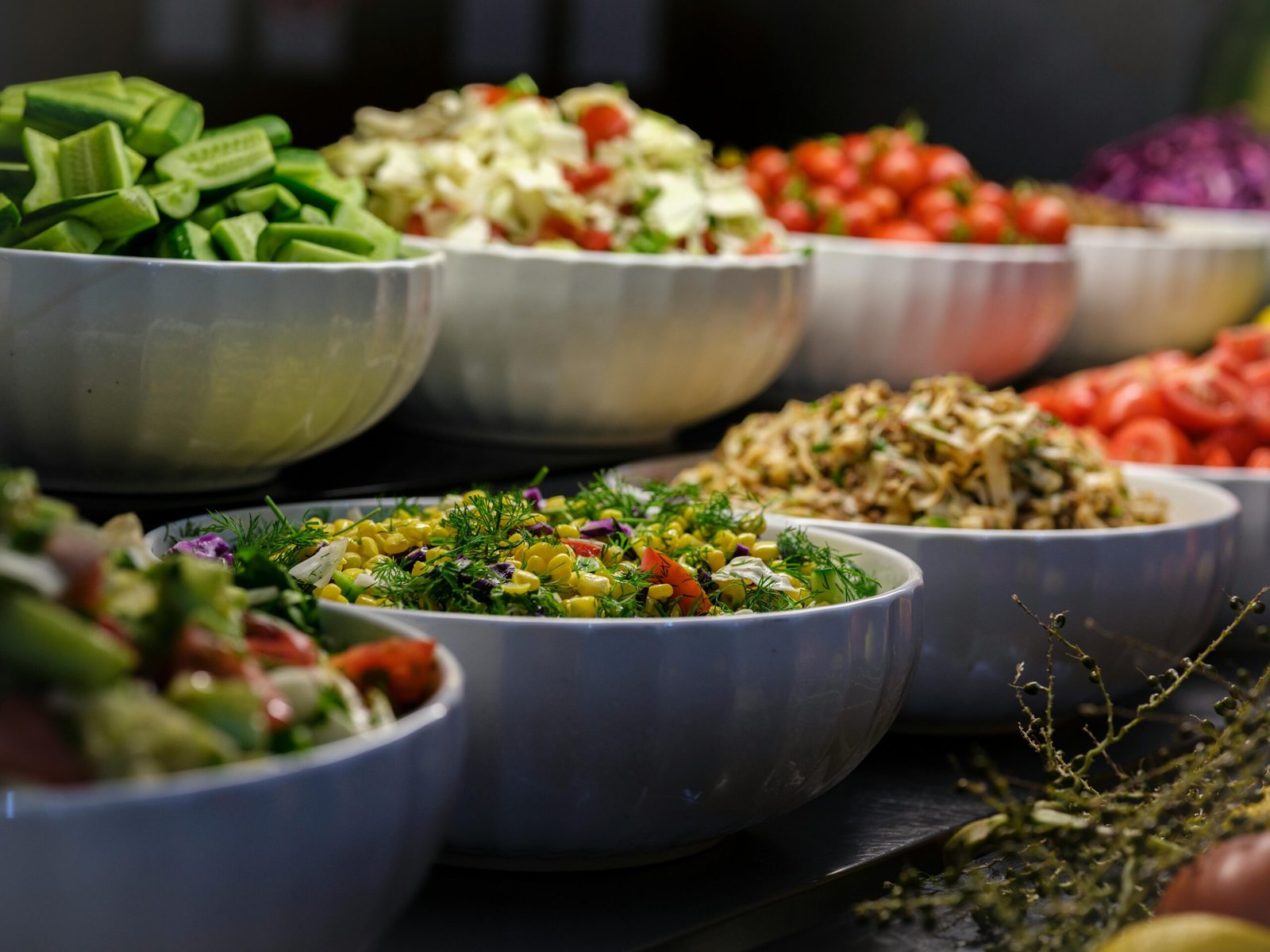
- Introducing Your First Tool: 11 Salads That Break Every Boring Rule
- Pro Tip: Let the Numbers Move You
- More Than Just a Theory
- 11 Powerhouse Salads with Explosive Flavor
For decades, the weight loss industry has thrived on making things complicated. Keto, cleanses, points, phases—it’s a dizzying array of rules designed to make you feel like you need a manual just to eat lunch. We’re here to tell you the secret they don’t want you to know: lasting change is simple. It’s not about perfection or punishment. It’s about one shift. One upgrade. One new habit, lived intentionally until it becomes your new normal. Then, and only then, do you add the next.
This is the “One Change” Method, and it’s the antithesis of diet drama. It’s the sustainable, sane path to a weight that fuels your life instead of complicating it.
But to understand why this method works, we need to clear away two of the biggest myths plastered over every fad diet book:
The Two Weight Loss Lies They’re Selling You
- The “Fat Doesn’t Matter” Lie: We’ve been told to fear carbs, sugar, gluten—everything except fat. The truth? While healthy fats are essential, dietary fat is the most calorie-dense nutrient we eat (9 calories per gram, more than double protein or carbs and four times that of fiber). When you consistently eat more fat than your body needs for fuel, it stores it. Simplistically: fat in = body fat stored. This isn’t a scare tactic; it’s basic math.
- The “Fiber is Optional” Lie: Modern diets are fiber-starved. We’ve swapped beans and grains for processed convenience, and our guts are screaming. Fiber isn’t just for “regularity.” It’s the key to stable blood sugar, lasting fullness, and a thriving gut microbiome. A lack of fiber = digestive turmoil, energy crashes, and constant hunger.
Magic happens when you address these two truths together.
The Powerful (and Simple) Science of “Swap, Don’t Starve”
Forget extreme numbers. Let’s talk about the goldilocks zone for healthy, sustainable change, backed by institutions like the National Academies of Sciences:
- Fat: For healthy weight loss, target 20-22% of your calories from fat. For a typical diet, that’s about 22-24 grams of fat per 1,000 calories. (The upper end, 30% or ~33g/1000 cal, is for weight maintenance). This is enough fat for good health and flavor without tipping the calorie scales.
- Fiber: The recommended daily intake for adults is 28-35 grams. This is the unsung hero that manages hunger, feeds good gut bacteria, and supports your metabolism (ie, you burn more).
See the synergy? Reduce the dense calories (fat) and increase the nutrient that manages hunger and health (fiber). You are not removing something; you are upgrading your body’s fuel system.
This is where your first, powerful change begins.
Your First “One Change” for Weight Loss: The Meal Swap
You don’t need to overhaul your life today. Start with one meal. Maybe 1 meal a day or even just 4 meals a week.
What if you swapped your predictable, high-fat, low-fiber lunch—the fast-food burger, the greasy pizza, the creamy pasta—for something radically nourishing and equally satisfying?
This single swap does the heavy lifting for you:
- Automatically cuts significant excess fat and calories. You didn’t just eat less fat and calories that meal alone, you ate less that day, and less that week with that one meal swap!!
- Automatically boosts your daily fiber by 10-15 grams. Do that a few times a week and your colon will thank you!
- Begins healing your gut with every single bowl. Our high-fat, low-fiber American diets beat our guts to smithereens, causing mid-afternoon tiredness and making us feel sluggish.
- Teaches your palate that “healthy” and “explosive flavor” are synonyms. The more you do it, the more your brain will ask for it, making it so easy to keep up with.
Start with one meal. Maybe 1 meal a day or even just 4 meals a week. Seriously. Just four times a week. Not even every day. The consistent calorie savings and fiber boost throughout the week will create a gentle deficit. Over a month, this one change can lead to real, noticeable weight loss. More importantly, you’ll feel the difference: in your energy, your digestion, and your confidence.
And yes, the more meals you swap, the more you’ll see that scale, your energy, and your confidence move in the right direction.
Introducing Your First Tool: 11 Salads That Break Every Boring Rule
This is where our Three Sisters philosophy comes to life. We created these salads to be your foolproof first change.
- Each salad is engineered to be under 5 grams of fat and over 10 grams of fiber. They are metabolic powerhouses. And don’t worry, they have the protein you need too.
- Some are built on timeless, comforting foundations—like the hearty Chili Salad, the classic Chef Salad, and the all-time satisfying Salad with Steak.
- Some explode with today’s boldest flavor profiles—like the zesty Buffalo Chicken Salad, the savory Chicken Philly Salad, and the vibrant Asian Chicken Salad.
These aren’t side dishes. They are main-event meals packed with protein, color, texture, and flavor. They prove that eating for a healthy weight can be the most exciting part of your day.
Pro Tip: Let the Numbers Move You
Making this change is simple, but if you’re curious about the numbers—or want to see the powerful impact of your swap—I have a go-to resource I champion to everyone.
I used a meal planner and macro tracker called Foodvisor (https://www.foodvisor.io). What sets it apart is that it includes fiber tracking right alongside calories, protein, fat, and carbs—a critical feature most apps either completely neglect or make you go on a goose chase to find it. (I’m looking at you, Samsung Health!).
I spent an untold number of hours on that frustrating hunt for an app that included fiber tracking with the other macronutrients before I found this. You can simply input what you plan to eat (like one of the salads below) and instantly see how it fits into your day’s goals. It’s the tool I used to engineer these recipes and the one I still use daily for my own meal planning and meal tracking.
Foodvisor doesn’t have an affiliate program, so you know I’m not paid to say this; I recommend Foodvisor because it genuinely solves the problem. It has a free version, but you might find the subscription worth the price. With that, you can set personal goals and adjust the macronutrient allocation to increase the fiber and decrease the fat allocations. Consider it your digital nutrition assistant.
More Than Just a Theory
This “one change” method isn’t a theory for me—it’s the practical, step-by-step process that helped me transform my health and lose ¾ of myself decades ago, and the same process I’m trusting now to shed the 25 “I quit smoking after 45 years” pounds that I gained last year.
A single, powerful shift, consistently embraced, changes everything. And it’s simple to do. Just set your Alexa (or preferred AI) to remind you on the first of each month that it’s time to review last month’s change and begin a new one this month.
This collection of salads is where my journey continues, and it’s where yours can begin. So, ready to make your first change? Dive into your first flavor explosion below.
Stay tuned for more tools in this series, where we’ll explore the next simple changes that, stacked together, build a lifetime of vibrant health.
— The Health Sister, Three Sisters Recipes & Traditions
P.S. The hype stops here. Just so you don’t think I pulled any of this out of my ass, here is a small sample of high-quality, accessible studies and reviews from reputable journals and institutions to check out for yourself so you can make your decisions based on true information, not hype.
1. Evidence on Dietary Fat, Fiber, and Weight Loss / Management
A. High Dietary Fat Intake Promotes Weight Gain:
- Study: “Effects of Dietary Composition on Energy Expenditure During Weight-Loss Maintenance” (JAMA, 2012). This famous study showed that a low-fat diet led to a higher metabolic rate (more calories burned at rest) compared to a low-carb diet with the same protein. It seriously challenges the “fat doesn’t matter” premise.
- Review: “Dietary fat intake and weight gain in women and men: prospective cohort studies.” (American Journal of Clinical Nutrition, 2017). A large, long-term review showing a direct association between higher intake of saturated and trans fats and weight gain over time.
B. Low Fiber Intake Contributes to Weight Gain & Health Issues:
- Review: “Dietary fiber and weight regulation.” (Nutrition Reviews, 2001). A classic paper detailing the mechanisms: fiber increases satiety (fullness), decreases absorption of fat/calories, and stabilizes blood sugar.
- Position Paper: “Health benefits of dietary fiber” (Nutrition Reviews, 2009). A comprehensive review by the American Society for Nutrition linking high fiber intake to lower body weight and reduced risk of obesity, citing effects on gut hormones and microbiota.
C. The Synergy: Reducing Fat & Increasing Fiber for Weight Loss:
- Landmark Study: “Comparison of the Atkins, Zone, Ornish, and LEARN Diets for Change in Weight and Related Risk Factors Among Overweight Premenopausal Women: The A TO Z Weight Loss Study” (JAMA, 2007). The Ornish diet (very low-fat, high-fiber, plant-based) showed significant weight loss and improved metabolic markers, demonstrating the efficacy of this approach.
- Government Guidelines: The Dietary Guidelines for Americans consistently recommend limiting saturated fat to <10% of calories and increasing fiber intake to the levels cited earlier (28-34g). This is the official, evidence-based stance.
- Link: https://www.dietaryguidelines.gov/sites/default/files/2020-12/Dietary_Guidelines_for_Americans_2020-2025.pdf (See Sections on Fats and Dietary Fiber)
2. Evidence of Fiber Increasing Metabolic Rate & Fat Oxidation to Help Weight Loss
- Study: “The role of dietary fiber in the bioaccessibility and bioavailability of fruit and vegetable antioxidants.” (Journal of Food Science, 2011). Explains how fiber improves the gut environment, which is linked to better metabolic health.
- Study: “Gut microbiota and human energy metabolism.” (Current Opinion in Clinical Nutrition & Metabolic Care, 2015). Reviews how a fiber-rich diet alters gut bacteria to produce Short-Chain Fatty Acids (SCFAs), which are directly linked to increased energy expenditure (metabolism) and fat burning.
- Review: “Effects of Dietary Fiber and Its Components on Metabolic Health.” (Nutrients, 2010). A clear review of how different fibers improve insulin sensitivity, reduce inflammation, and support metabolic rate.
3. Evidence on Habit Formation & Single Small, Sequential Changes vs. Overhaul Methodology
- Key Concept: This is rooted in behavioral psychology theory like “Small Wins” (Karl Weick) and “Habit Stacking” (popularized by James Clear in Atomic Habits, which is based on cognitive science).
- Study: “Long-term weight loss maintenance.” (American Journal of Clinical Nutrition, 2005). This review of successful maintainers finds that they use key behavioral strategies (like consistent self-monitoring) that are best built one at a time, not all at once.
- Practical Evidence: The National Weight Control Registry (NWCR), the largest study of successful long-term weight loss, tracks people who have lost 30+ lbs. and kept it off for a year+. Their strategies include eating a low-fat, high-fiber diet and consistent self-monitoring—behaviors perfectly suited to the “one change” method.
- Link to NWRC findings: https://www.nwcr.ws/Research/default.htm
11 Powerhouse Salads with Explosive Flavor
1. Crunchy Asian Chicken Salad Recipe with Ginger-Soy Dressing
Fat: 4g | Fiber: 12g | Protein: xxg | Carbs xxg | Calories xx
- Grilled chicken breast
- Chinese cabbage + bok choy mix
- Edamame (shelled, steamed)
- Shredded carrots
- Snow peas
- Bamboo shoots
- Green onion
- Fresh Cilantro
- Rice vinegar, soy sauce, fresh ginger, minced garlic, sesame seeds, sweetener
2. Southwestern Chicken Fiesta Salad Recipe
Fat: 3g | Fiber: 15g | Protein: xxg | Carbs xxg | Calories xx
- Grilled chicken breast
- Romaine lettuce
- Black beans
- Corn kernels
- Tomatoes
- Red onion
- Red bell pepper
- Jicama (for crunch)
- Lime juice, fresh cilantro, cumin, chili powder, garlic powder & salsa
3. Crispy Oven-“Fried” Chicken Salad
Fat: 4g | Fiber: 11g | Protein: xxg | Carbs xxg | Calories xx
- Chicken breast
- Egg whites
- Panko breadcrumbs
- Seasonings
- Mixed greens
- Broccoli
- Cherry tomatoes
- Carrot
- Cucumber
- Fat-free Greek yogurt, Dijon mustard, honey or maple syrup, apple cider vinegar, dill
4. Fiesta Chicken Taco Salad
Fat: 3g | Fiber: 14g | Protein: xxg | Carbs xxg | Calories xx
- Taco seasoned ground chicken breast
- Romaine
- Fat-free refried beans
- Tomatoes
- White onion
- Corn kernels
- Jicama or turnip
- Fresh cilantro
- “Crema”: fat-free Greek yogurt, lime juice & cumin
5. Chicken Philly Cheesesteak Salad with Crispy Roasted Potato Fries
Fat: 4g | Fiber: 10g | Protein: xxg | Carbs xxg | Calories xx
- Chicken breast
- Mixed greens
- Green cabbage
- Mushrooms
- Green/red bell pepper
- Onion
- 1 slice low-fat cheddar or Colby cheese (torn)
- Roasted potatoes
- Beef or vegetable broth, Worcestershire sauce, Dijon mustard, garlic & onion powder
6. Buffalo Chicken Salad
Fat: 4g | Fiber: 11g | Protein: xxg | Carbs xxg | Calories xx
- Chicken breast
- Romaine lettuce
- Celery
- Carrot
- Cherry tomatoes
- Red onion
- Green onion
- Buffalo Wing sauce (0g fat)
- fat-free Greek yogurt, apple cider vinegar, garlic powder
7. Chef Salad
Fat: 5g | Fiber: 12g | Protein: xxg | Carbs xxg | Calories xx
- Deli turkey breast
- Deli chicken breast
- Boiled egg (whites only, yolk discarded)
- 1 slice fat-free cheddar cheese
- Mixed greens
- Cherry tomatoes
- Cucumber
- Steamed green beans
- Carrot
- Chickpeas
- Fat-free Italian dressing, Dijon mustard, herbs
8. Salad with Steak
Fat: 5g | Fiber: 13g | Protein: xxg | Carbs xxg | Calories xx
- Lean sirloin steak
- Arugula + spinach mix
- Roasted mushrooms
- Roasted cherry tomatoes
- Red onion
- Lentils
- Balsamic vinegar, Dijon mustard, Worcestershire sauce, minced garlic & rosemary
9. Chili Salad
Fat: 3g | Fiber: 18g | Protein: xxg | Carbs xxg | Calories xx
- Romaine
- Green cabbage
- Red onion
- Corn kernels
- Fresh cilantro
- Kidney and black beans
- Stewed tomatoes
- Bell or hot pepper
- Onion
- Chili powder, cumin & garlic
- Fat-free Greek yogurt for topping
10. Salad with Salmon
Fat: 5g | Fiber: 11g | Protein: xxg | Carbs xxg | Calories xx
- Wild salmon
- Mixed greens
- Steamed green beans
- Carrot
- Cucumber
- Red onion
- Barley or farro
- Lemon juice, Dijon mustard, capers, dried dill & black pepper
11. Greek Salad
Fat: 4g | Fiber: 10g | Protein: xxg | Carbs xxg | Calories xx
- Grilled chicken breast or chickpeas
- Romaine
- Cucumber
- Cherry tomatoes
- Red onion
- Green/red bell pepper
- Green olives
- Fat-free feta cheese crumbles
- Red wine vinegar, oregano, garlic & Dijon mustard
Key Techniques for Ultra-Low Fat:
- Cooking Methods: Grill, bake, steam, or sauté with broth or water instead of oil.
- Protein Selection: Use only the leanest cuts (skinless poultry, lean beef, white fish).
- Dressings: Built on vinegar, citrus, mustard, herbs, spices, and fat-free dairy.
- Fiber Boosters: Beans, lentils, edamame, cabbage, broccoli, carrots, and whole grains.
- Flavor: Generous use of garlic, ginger, herbs, spices, citrus zest, and vinegars.